Who Is Responsible for Health and Safety in Your Business?
WA’s health and safety laws changed in 2022, but many small businesses are still unsure of their duties. A plain English guide to PCBU, officer and worker responsibilities.
Topics: WHS, Small Business, General
On 31 March 2022, Western Australia brought in the biggest change to health and safety law in a generation. The Work Health and Safety Act 2020 (often called the WHS Act) replaced the Occupational Safety and Health Act 1984, which had been in place for almost 40 years.
More than four years on, we are still meeting small business owners who aren’t sure what changed, or what it means for them.
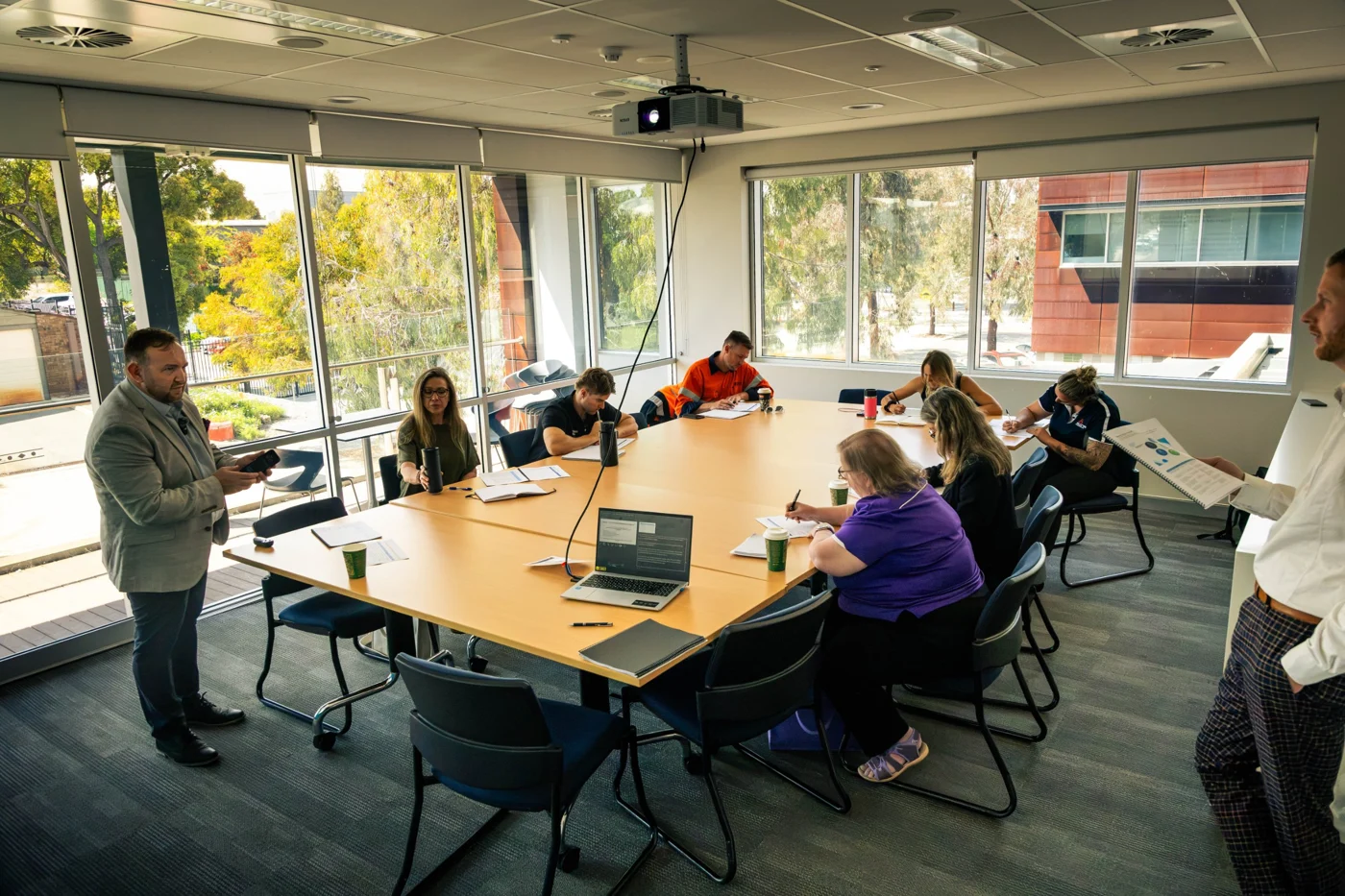
At our recent health and safety seminar with the City of Kwinana, one of the first things we asked was simple: who holds health and safety responsibilities in your business? The answer is usually “more people than you think”, and often the owner holds more than one.
The law sets out three main duty holders. Here is what each one means in plain English.
PCBU: the primary duty of care
PCBU stands for “person conducting a business or undertaking”. If you run a business, you are a PCBU. If you are a sole trader or in a partnership, that means you personally. If your business is a company, the company itself is the PCBU.
A PCBU has the primary duty of care. That means you must ensure, so far as is reasonably practicable, the health and safety of your workers and anyone else affected by your work.
In practice, that covers things like:
a safe workplace, including safe ways in and out
safe equipment, tools and vehicles
safe ways of doing the work
safe use and storage of chemicals and materials
proper facilities like toilets, water and first aid
the information, training and supervision people need
keeping an eye on workers’ health and workplace conditions
“Reasonably practicable” doesn’t mean you need a complex system. It means doing what is reasonable for the level of risk in your work. Risk comes first, cost comes last.
Download our [PCBU Primary Duty of Care Checklist](/resources/health-safety-checklists) to see how your business measures up.
Officer: exercise due diligence
An officer is someone who makes, or has a big say in, decisions that affect the whole business. If your business is a company, that is usually the directors, and sometimes senior managers. Sole traders and partners are not officers, because they already hold the PCBU duty themselves.
Officers must exercise due diligence. In simple terms, you need to take reasonable steps to make sure the business is meeting its health and safety duties.
The law sets out six steps. Officers must:
1. learn about WHS and keep that knowledge up to date
2. understand the work the business does and the hazards and risks that come with it
3. make sure the business has the right resources and processes in place, and uses them, to eliminate or minimise those risks
4. make sure the business has a way to receive and consider information about incidents, hazards and risks, and respond quickly
5. make sure the business has processes to meet its WHS duties, and that they are actually followed
6. verify (check and confirm) that those resources and processes are being provided and used
This is a personal duty. It isn’t enough to assume someone else has it covered.

Download our [Six Steps to Due Diligence Checklist](/resources/health-safety-checklists) to check what evidence you could show.
Worker: take reasonable care
A worker is anyone who carries out work for the business. That includes employees, contractors, subcontractors, labour hire workers, apprentices and volunteers.
Workers must:
take reasonable care of their own health and safety
take reasonable care not to put others at risk
follow reasonable safety instructions
cooperate with reasonable safety policies and procedures
Workers have a duty, but it doesn’t replace yours. Their duty sits alongside the PCBU and officer duties, not instead of them.
Duties are shared, not handed over
In a small business, one person often wears more than one hat. A sole trader is the PCBU, and a worker when they are on the tools. A director of a small company is an officer, and a worker when they are on the tools, while the company itself is the PCBU.
Duties are also shared between businesses. When you bring in a contractor, you both owe duties as PCBUs. If that contractor brings in a subcontractor, they do too. Everyone in the chain owes a duty to the workers doing the job, so each business needs to talk to the others and agree who is doing what. A sole trader contractor can even be a PCBU and a worker at the same time.
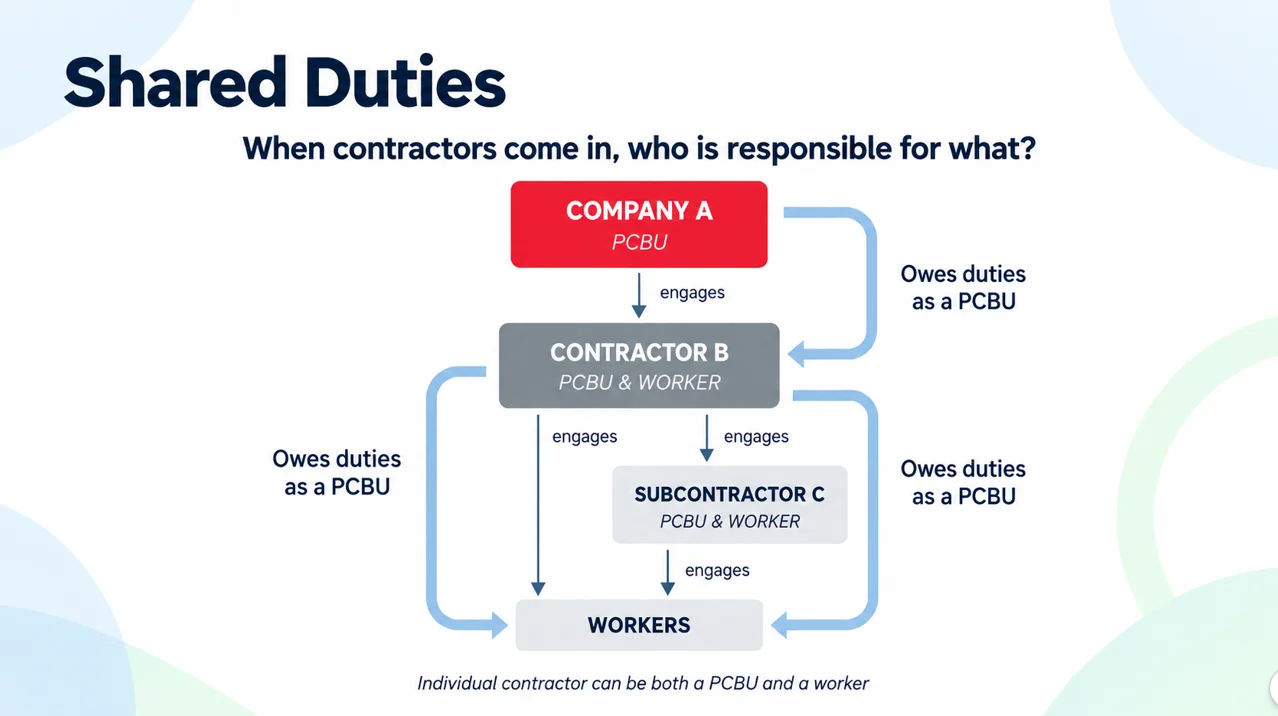
That is why two of the most common safety myths we hear are “that’s the contractor’s responsibility, not ours” and “if something goes wrong, that’s on the supervisor”. Neither is true. You can share a duty, but you can’t hand it over.
We will look at shared duties in more detail in a future blog.
Where to start
You don’t need to overcomplicate it. Start by working out which duties you hold, then use the two checklists to see where you stand.
Useful links
[WorkSafe WA: Person conducting a business or undertaking (PCBU)](https://www.worksafe.wa.gov.au/person-conducting-business-or-undertaking-pcbu)
[WorkSafe WA: PCBU responsibilities information sheet](https://www.worksafe.wa.gov.au/publications/pcbu-responsibilities-translated)